
Loading…
Loading…
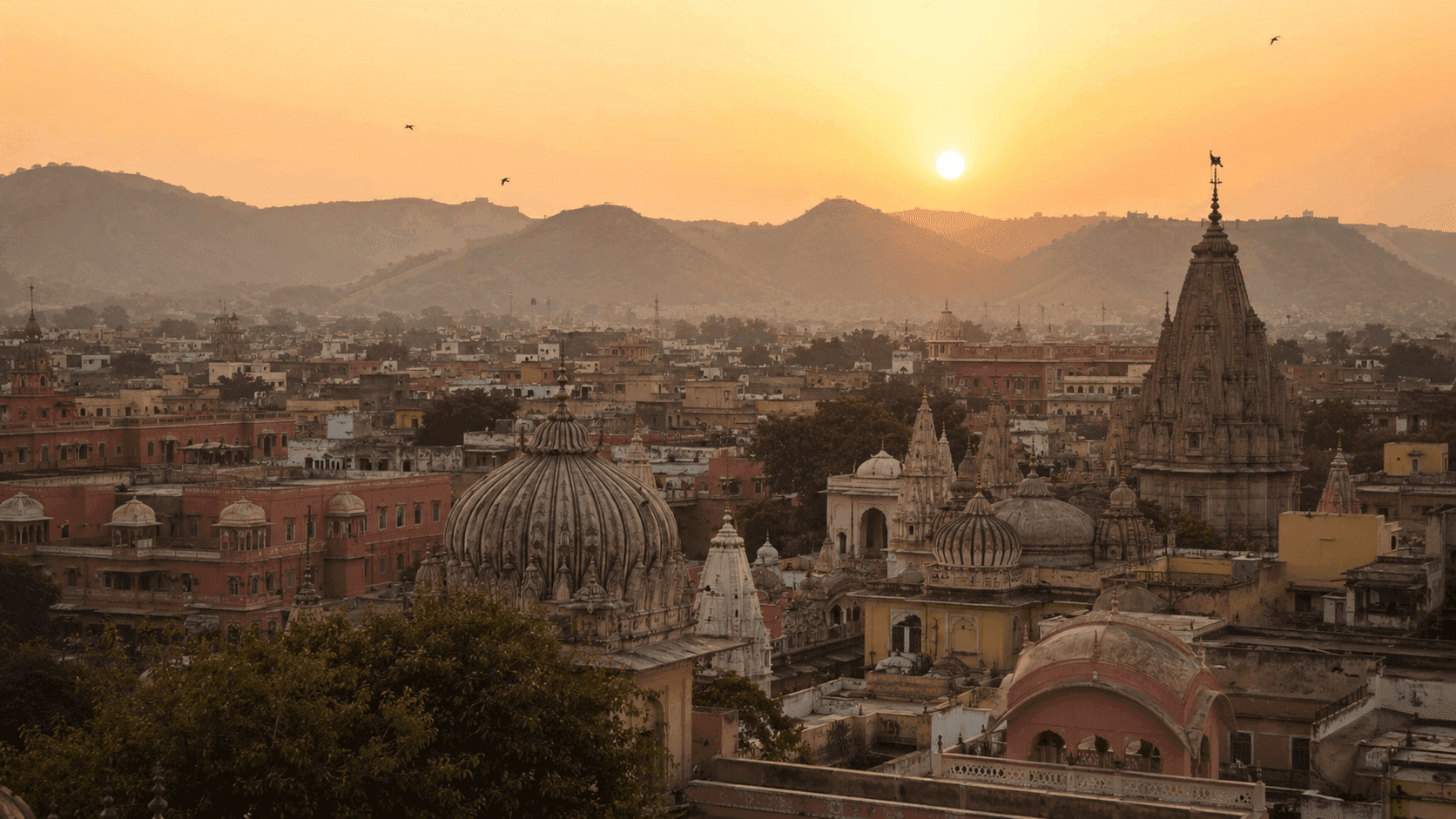
Jaipur is usually introduced through its grand forts, pink façades, royal palaces and colourful bazaars. Yet some of the most meaningful experiences in the Pink City take place inside its temples, where royal history, local traditions and everyday devotion continue to exist together. Founded by Maharaja Sawai Jai Singh II in 1727, Jaipur was designed as a planned city, with its urban structure influenced by traditional architectural principles. The historic walled city is now recognised as a UNESCO World Heritage Site, making Jaipur an important destination for travellers interested in architecture, culture and living heritage.
The famous temples in Jaipur range from royal shrines located inside palace complexes to marble temples, hilltop sanctuaries and ancient pilgrimage centres surrounded by the Aravalli landscape. Some are closely connected with Jaipur’s former rulers, while others are important neighbourhood temples visited by thousands of local devotees.
This guide explores the most significant temples in Jaipur, their history, religious importance and practical information for planning a spiritual journey through the city.
Temple | Main deity or tradition | Location | Why it is famous |
|---|---|---|---|
Govind Dev Ji Temple | Lord Krishna | City Palace complex | Royal temple associated with Jaipur’s Kachwaha rulers |
Moti Dungri Ganesh Temple | Lord Ganesha | JLN Marg | One of Jaipur’s most revered Ganesh temples |
Birla Mandir | Lord Vishnu and Goddess Lakshmi | Moti Dungri area | White-marble architecture and peaceful surroundings |
Galtaji Temple | Hindu pilgrimage complex | Eastern Jaipur | Natural springs, sacred kunds and hill setting |
Garh Ganesh Temple | Lord Ganesha | Brahmapuri–Nahargarh hills | Historic hill temple with a distinctive Ganesha form |
Shila Devi Temple | Goddess Shila Devi | Amer | Sacred shrine within the Amer heritage area |
Khole Ke Hanuman Ji | Lord Hanuman | Delhi Road–Galta hills area | Popular Hanuman temple surrounded by the Aravalli landscape |
BAPS Swaminarayan Mandir | Swaminarayan tradition | Vaishali Nagar | Contemporary spiritual centre in western Jaipur |
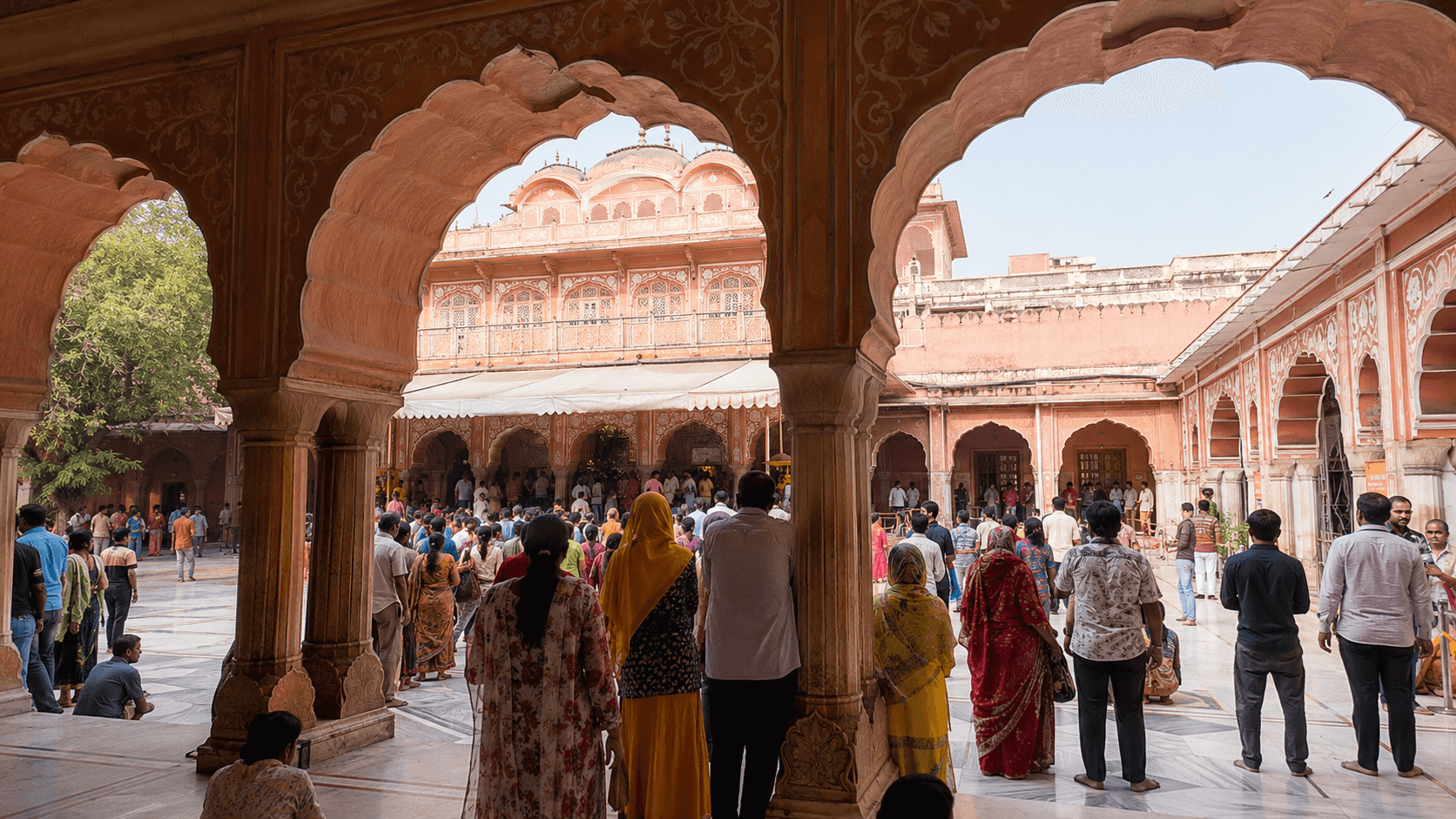
For many devotees, the Govind Dev Ji Temple is the most important temple in Jaipur. Located within the City Palace complex between Badal Mahal and Chandra Mahal, it is deeply connected with Jaipur’s royal history.
Rajasthan Tourism records that the temple was built in 1735 by Maharaja Sawai Jai Singh II. The deity, Govind Dev Ji, was also worshipped as the principal deity of Amber’s Kachwaha dynasty.
Unlike temples that visitors explore only for architecture, Govind Dev Ji remains an intensely active place of worship. Devotees gather for different jhankis, when the deity is revealed for darshan according to the temple’s daily ritual schedule. The sound of devotional music, bells and congregational prayer creates an atmosphere that is different from Jaipur’s nearby tourist monuments.
Govind Dev Ji also has an important connection with the broader Krishna-worship tradition. Rajasthan Tourism describes it as one of the seven temples of Vrindavan Thakur, a group that also includes Shri Banke Bihari Ji and other prominent Krishna traditions. This gives the temple religious importance beyond Jaipur and helps explain why pilgrims familiar with the Banke Bihari Temple tradition often include Govind Dev Ji in their spiritual journeys.
Visit this temple to experience the close relationship between Jaipur’s royal identity and Krishna devotion. It can conveniently be combined with City Palace, Jantar Mantar, Hawa Mahal and the markets of the historic city.
Planning tip: Darshan is organised around specific jhanki periods rather than continuous viewing throughout the day. Confirm the current schedule before travelling, particularly during Janmashtami, Holi and other major festivals.
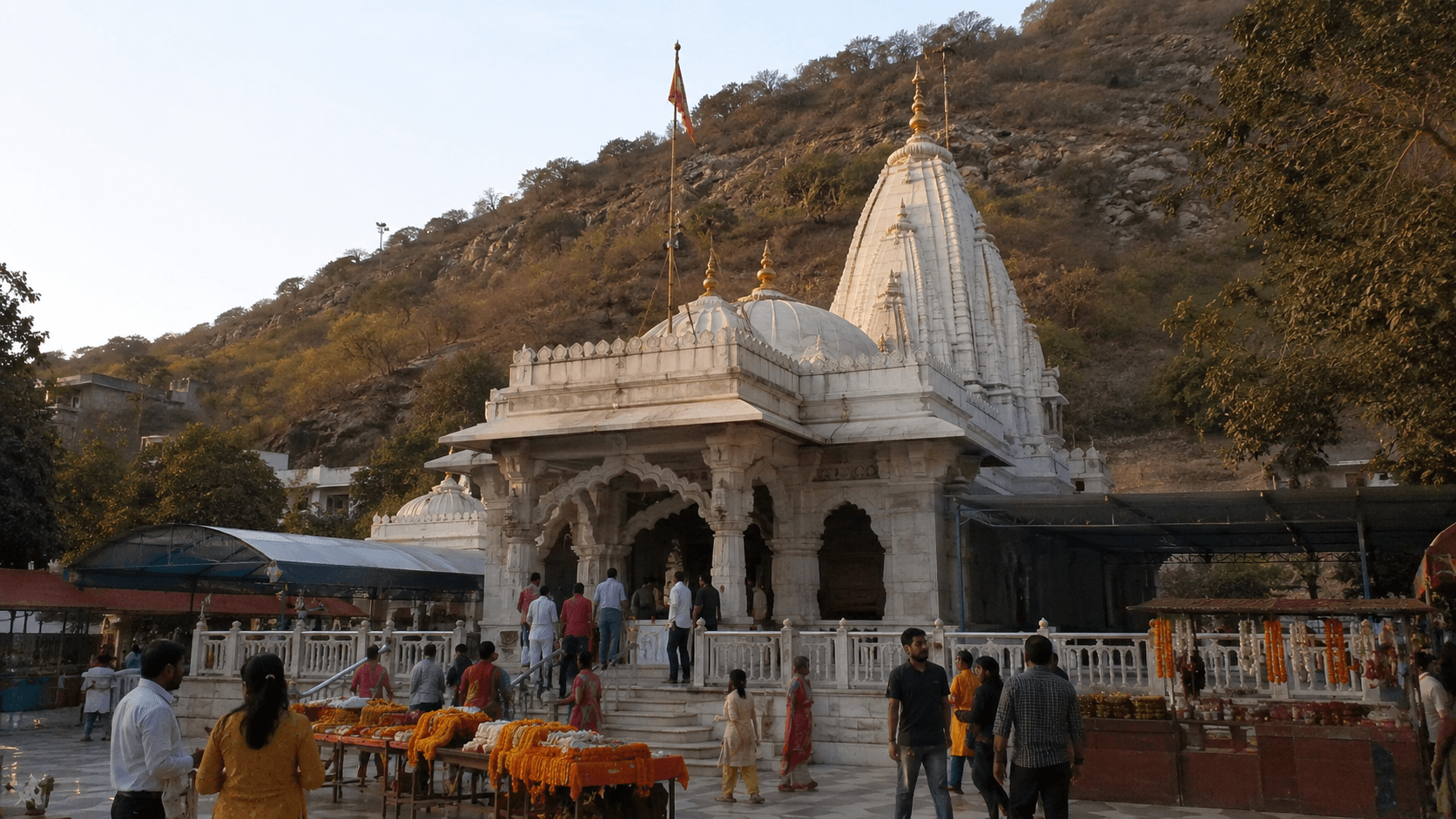
Moti Dungri Ganesh Temple is among the most recognised and frequently visited Hindu temples in Jaipur. Situated beneath the Moti Dungri hill, the temple is dedicated to Lord Ganesha, who is traditionally worshipped before new ventures, ceremonies and important life events.
According to Rajasthan Tourism, the temple was constructed by Seth Jai Ram Paliwal during the early 18th century. A well-known tradition associated with the shrine says that the temple’s location was selected where the cart carrying the Ganesha idol came to a halt.
The temple receives devotees throughout the week, although Wednesdays and festivals associated with Lord Ganesha can be particularly busy. Families commonly visit to pray for success, prosperity, education, marriage and the removal of obstacles.
Its location also makes it suitable for travellers who want to visit more than one temple without spending an entire day in transit.
The temple offers an authentic view of Jaipur’s everyday religious life. Unlike a monument visited mainly by tourists, Moti Dungri remains a living community shrine where local families, students, professionals and visitors come together in worship.
Birla Mandir is located nearby, allowing both temples to be included in the same morning or evening temple circuit.
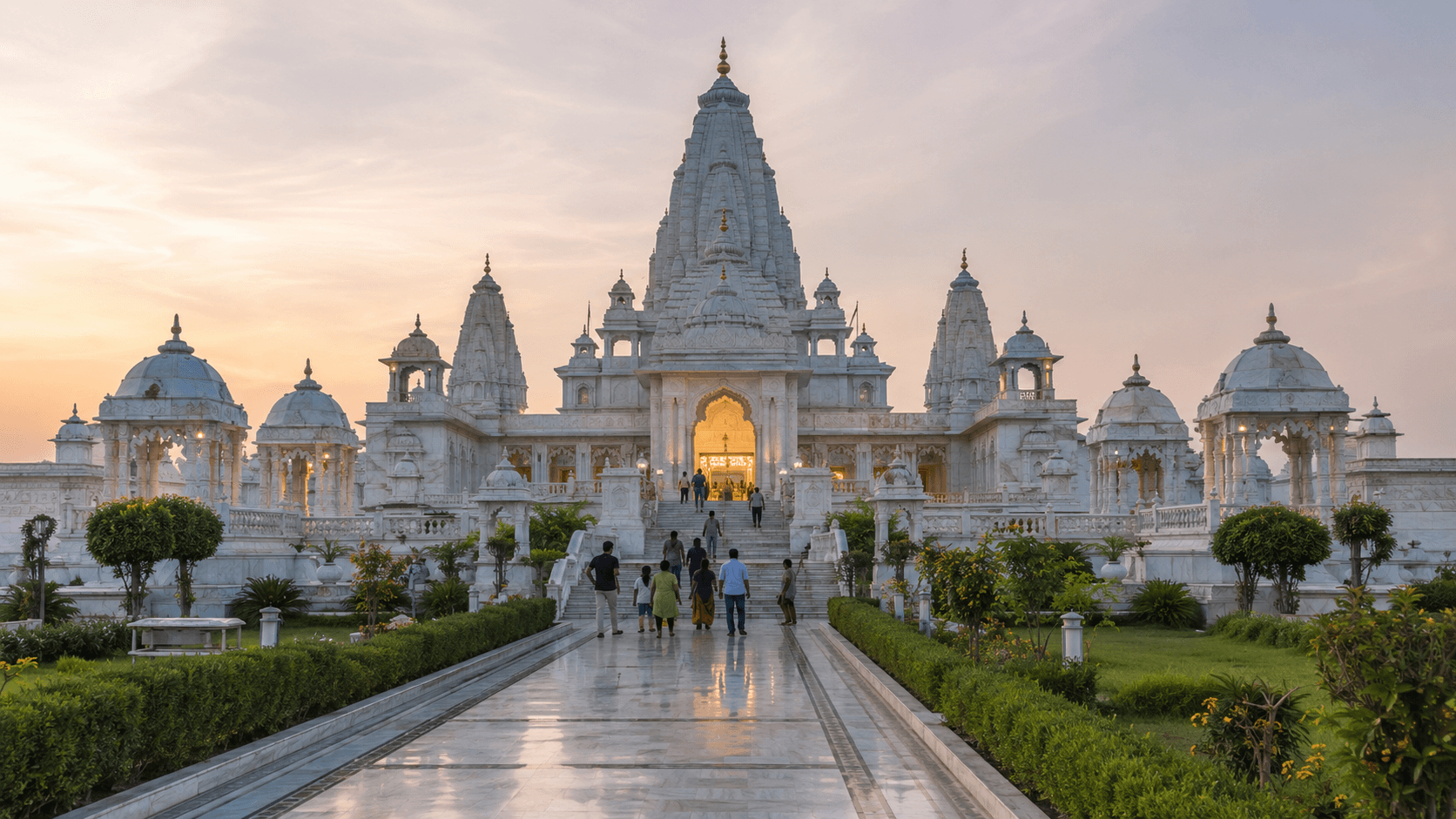
Birla Mandir, officially known as the Lakshmi Narayan Temple, stands at the base of Moti Dungri hill. Its polished white-marble exterior creates a striking contrast with the surrounding landscape, particularly when the structure is illuminated after sunset.
Rajasthan Tourism states that the temple was commissioned by the Birla family and completed in 1988. It is dedicated to Lord Vishnu, worshipped as Narayan, and Goddess Lakshmi, the deity associated with wealth and good fortune.
Although it is comparatively modern when placed beside Jaipur’s older historical temples, Birla Mandir has become one of the city’s best-known spiritual and architectural landmarks. Its elevated platform, marble surfaces and uncluttered surroundings give it a calm and contemplative character.
This temple is particularly suitable for families, senior travellers and visitors who prefer an easily accessible place of worship. The marble architecture also makes it one of the most visually distinctive temples in Jaipur.
An evening visit is often rewarding because the illuminated structure can be viewed against the darker outline of Moti Dungri hill.
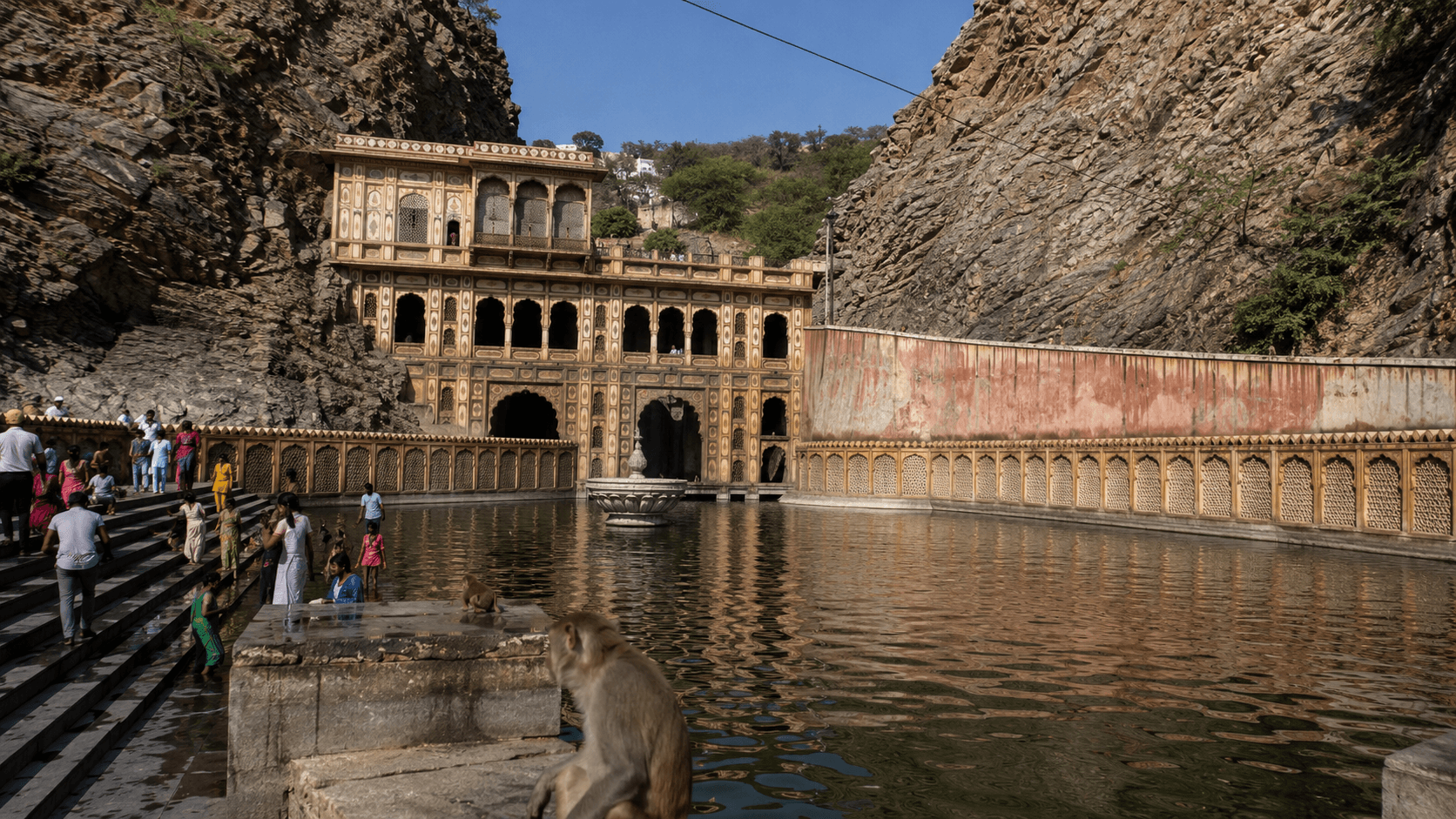
Galtaji is more than a single temple. It is a historic pilgrimage complex containing shrines, pavilions, natural springs and sacred water tanks known as kunds.
The complex is situated among low hills on the eastern side of Jaipur. Rajasthan Tourism describes Galtaji as an ancient pilgrimage centre with temples, pavilions and holy kunds. The complex also includes the Ramgopalji Temple, popularly called the Monkey Temple because of the large number of monkeys found in the area.
The Ministry of Tourism’s Incredible India portal similarly describes the site as a complex of shrines, natural springs and water tanks set within the Aravalli hills. The combination of water, stone architecture and rugged landscape makes Galtaji different from Jaipur’s urban temples.
For generations, pilgrims have visited the sacred kunds for ritual bathing and prayer. The site becomes particularly active during religious occasions, including Makar Sankranti.
Galtaji is one of the best places to understand how spirituality and natural geography come together in Rajasthan. Visitors can observe historic architecture, devotional traditions and the unusual presence of natural water sources in Jaipur’s otherwise dry landscape.
Keep food securely stored and avoid teasing or feeding the monkeys. Wear footwear suitable for uneven surfaces and maintain respectful behaviour around pilgrims using the kunds. Photography should never interrupt prayers or private religious rituals.
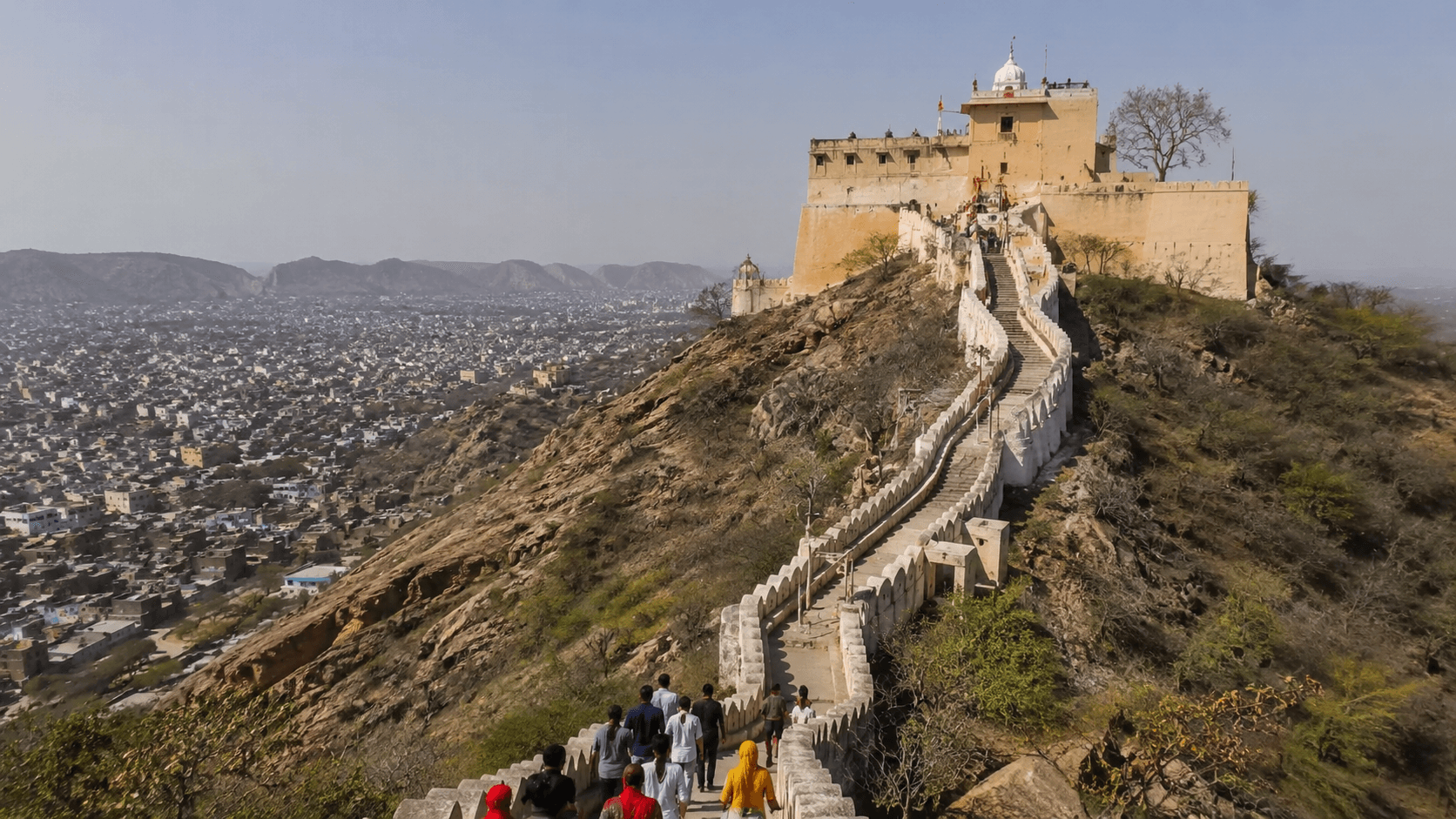
Garh Ganesh Temple is situated in the hills near Brahmapuri and the Nahargarh area. Reaching the temple requires climbing a series of steps, but the elevated setting rewards visitors with a peaceful atmosphere and views across parts of Jaipur.
The temple’s official information describes it as an 18th-century shrine dedicated to Lord Ganesha. It is especially known for presenting Ganesha in a distinctive form without the familiar trunked appearance seen in most Ganesha icons.
The Ministry of Tourism also recognises Garh Ganesh as an important Jaipur temple reflecting the city’s historical and devotional traditions.
Garh Ganesh is well suited to travellers looking for a quieter spiritual experience away from Jaipur’s busiest streets. The climb, hill setting and historic character make the journey feel like a short pilgrimage within the city.
Visit early in the morning or during the cooler part of the evening, and carry drinking water during warmer months.
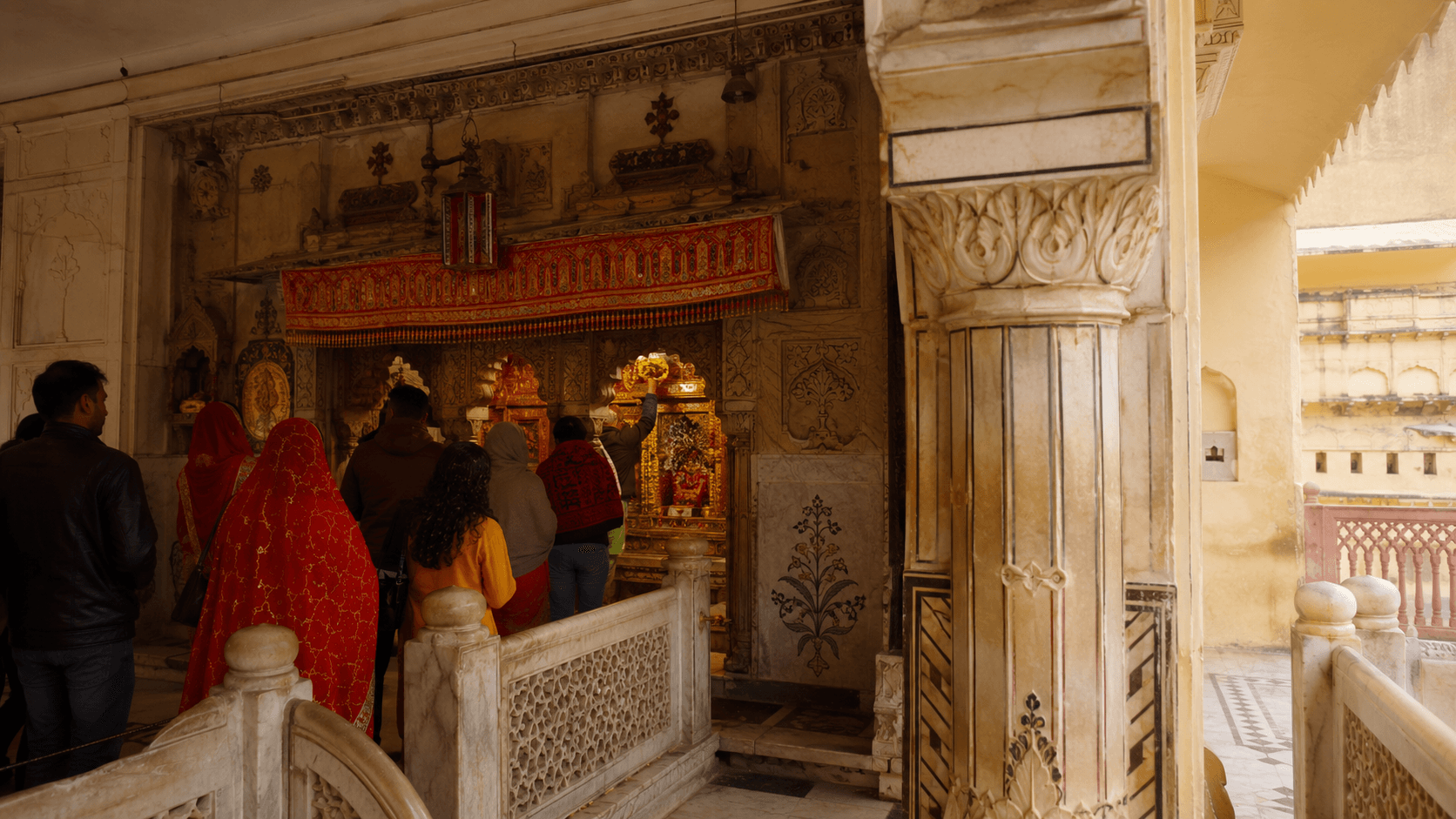
Shila Devi Temple is located in the Amer area and has long been associated with Rajasthan’s royal and religious heritage. The Rajasthan Foundation identifies Shila Devi at Amer as one of the state’s major temples connected with the Devasthan Department.
A visit to the shrine can be combined with Amer Palace, one of Jaipur’s most prominent heritage attractions. Rajasthan Tourism describes Amer Palace as a major example of Rajasthani architecture situated approximately 11 kilometres from central Jaipur.
This is an excellent stop for travellers interested in both royal architecture and Shakti worship. It demonstrates how temples were incorporated into fortified royal complexes and remained central to courtly as well as public religious life.
Because access is connected with the Amer heritage area, visitors should verify monument entry arrangements, temple darshan rules and festival-day restrictions in advance.
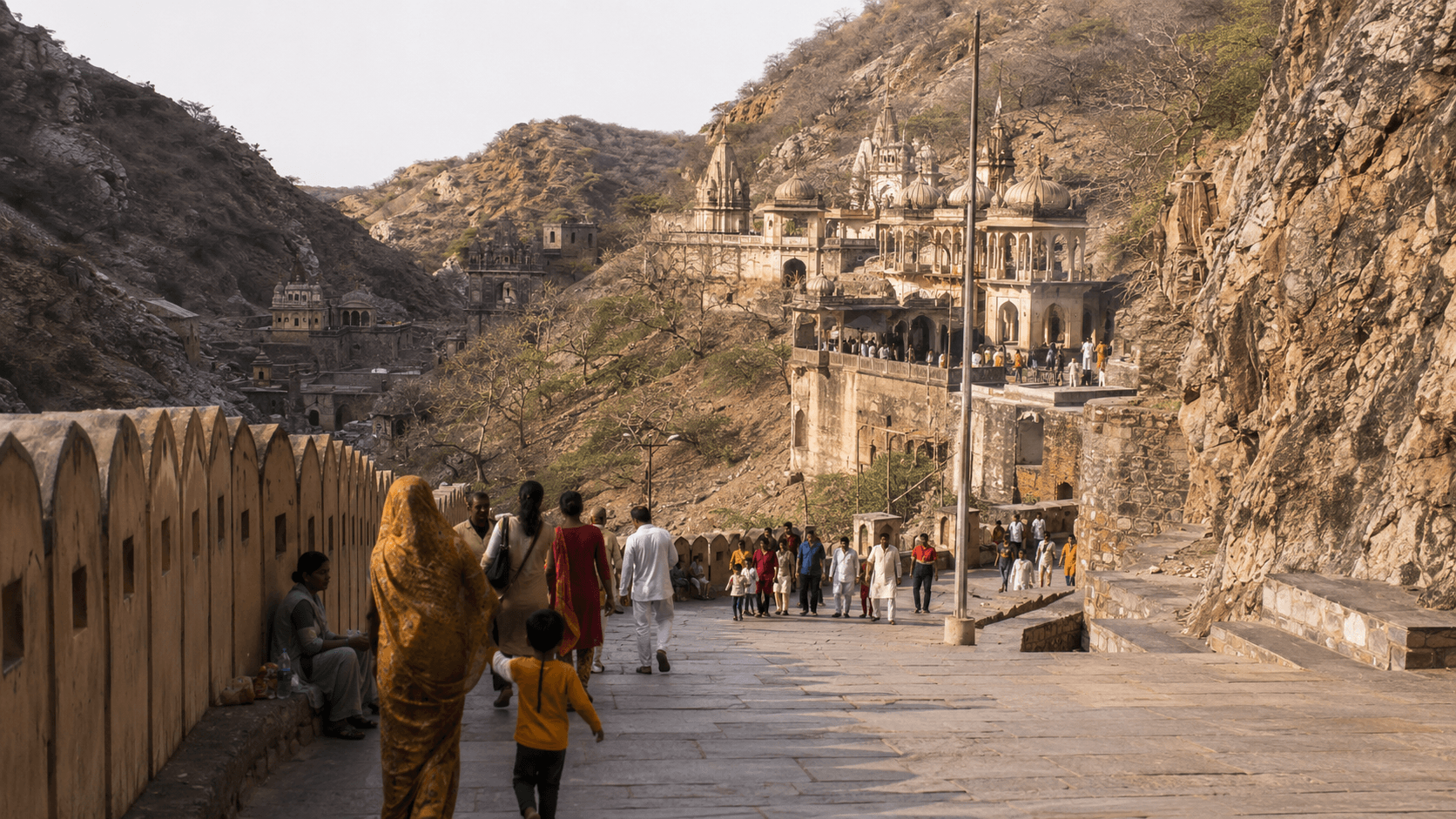
Khole Ke Hanuman Ji is one of Jaipur’s most popular Hanuman temples. Located near the hilly eastern side of the city, it attracts families and devotees seeking the blessings of Lord Hanuman.
The temple is recognised by Rajasthan’s tourism authorities as one of Jaipur’s important religious places. The Jaipur Development Authority has also undertaken conservation and development work around the Khole Ke Hanuman Ji temple area, reflecting its importance within Jaipur’s religious landscape.
The Ministry of Tourism recommends Khole Ke Hanuman Ji as one of the spiritual attractions that can be visited around the Galtaji area.
The temple combines an active devotional environment with a scenic location. It can be paired with Galtaji, although travellers should allow sufficient time because roads around major temples may become crowded on weekends and festivals.
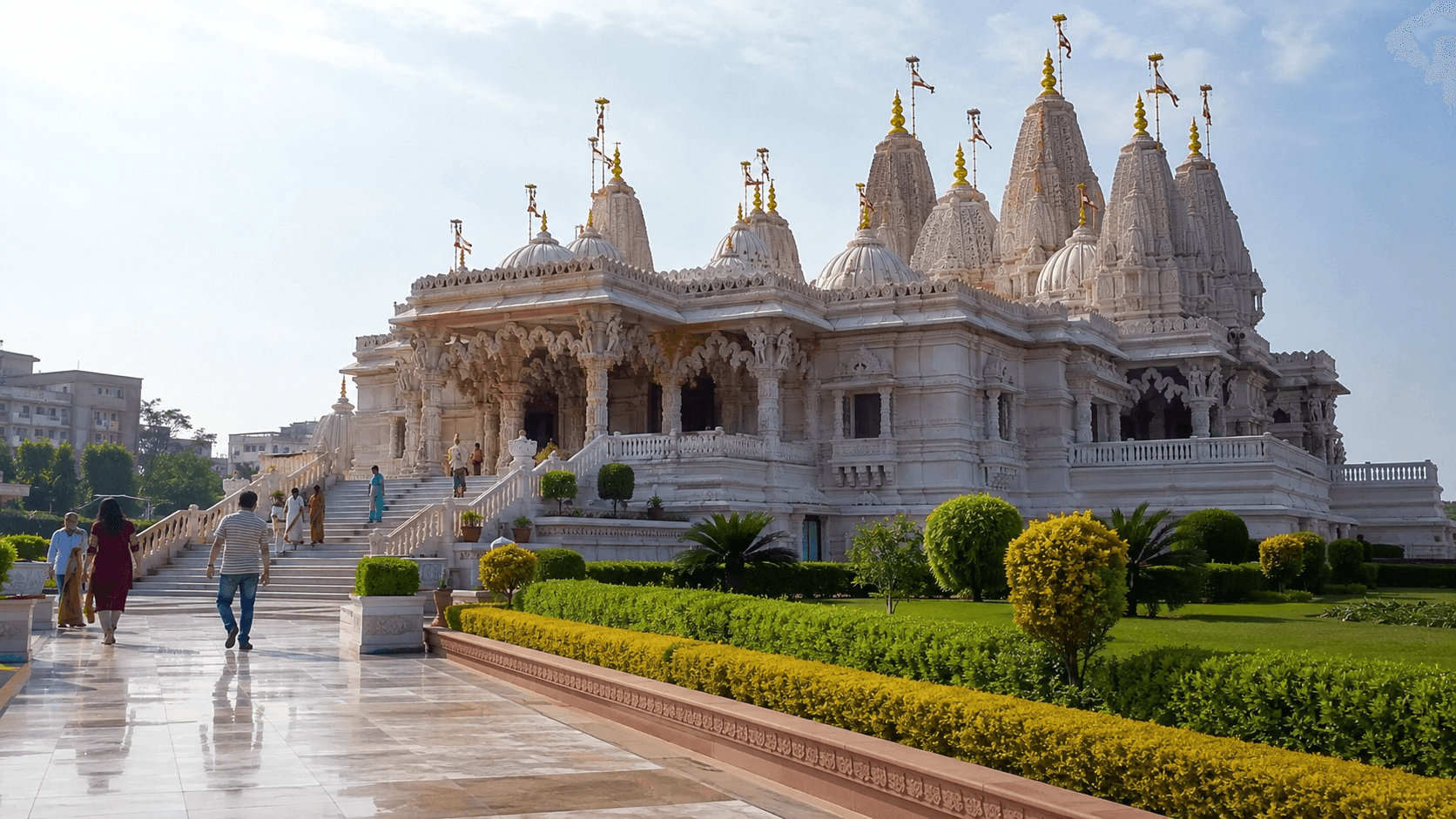
BAPS Shri Swaminarayan Mandir is a contemporary spiritual centre located in Vaishali Nagar. The official BAPS directory places the temple at Swaminarayan Chowk, opposite Chitrakut Sector 9 in Jaipur.
The temple provides a peaceful place for prayer, reflection and participation in the Swaminarayan tradition. Its western Jaipur location makes it especially convenient for travellers staying in or around Vaishali Nagar.
This temple adds a modern dimension to a Jaipur temple itinerary. It shows that the city’s religious landscape is not limited to ancient or royal temples; new places of worship continue to support active spiritual communities.
Visitors with limited time can cover several major temples by grouping them geographically.
Begin early with Govind Dev Ji Temple and explore the surrounding City Palace area. Continue towards Garh Ganesh Temple if weather and mobility allow.
After a midday rest, visit Moti Dungri Ganesh Temple followed by Birla Mandir. Both are located in the same broader area and work well as an evening combination.
Galtaji, Khole Ke Hanuman Ji and Amer’s Shila Devi Temple are better planned as separate half-day excursions because they lie away from the central temple circuit.
The cooler months are generally more comfortable for temple visits, heritage walks and hill climbs. Jaipur’s temperatures are typically lower between late autumn and early spring than during the intense summer months, when daytime heat can make outdoor exploration tiring.
Early mornings are ideal for a quieter atmosphere, while evenings are suitable for Birla Mandir and urban temples. During Janmashtami, Ganesh Chaturthi, Navratri, Makar Sankranti and other major festivals, temples may be beautifully decorated but considerably more crowded.
Always confirm current darshan timings before visiting. Temple schedules can change because of seasonal rituals, festivals, maintenance work and special religious events.
Wear modest clothing that covers the shoulders and knees. Remove footwear before entering the designated worship area and follow instructions given by temple staff.
Avoid taking photographs inside sanctums unless permission is clearly provided. Keep phones silent, do not block darshan queues and avoid touching idols, ritual objects or offerings.
At Galtaji and other locations with monkeys, keep food and loose belongings safely packed. Travellers should also avoid entering sacred water tanks merely for photographs.
Khatu Shyam Ji Temple is frequently included in pilgrimage journeys beginning from Jaipur, but it is important to clarify that the shrine is not located in Jaipur. It is situated in Rajasthan’s Sikar district and is recognised as one of the state’s major pilgrimage destinations.
Travellers can use Jaipur as a base and plan a dedicated road journey to Khatu rather than adding it to a same-city temple itinerary.
Sanwaliya Seth Temple is another important Rajasthan pilgrimage site, but it is located at Mandafiya in Chittorgarh district. Rajasthan Tourism places the temple on the Chittorgarh–Udaipur highway and notes that it receives a large number of devotees.
Because of the distance from Jaipur, Sanwaliya Seth is better included in a separate Chittorgarh or Udaipur religious itinerary.
Choosing accommodation according to the temple circuit can reduce travel time and make early-morning darshan easier. Sarovar Hotels in Jaipur has currently listed multiple properties, including hotels in the central city, Vaishali Nagar, Lal Kothi and Kukas.
For Govind Dev Ji and the historic city, V Sarovar Portico, MI Road provides a centrally located base. The hotel’s official page places City Palace approximately 3.1 kilometres away and Hawa Mahal around 3.3 kilometres away.
For visitors exploring Moti Dungri, Birla Mandir and southern Jaipur, Sarovar Premiere, Jaipur, located at Lal Kothi, offers convenient access to the broader central and southern parts of the city.
Travellers visiting the BAPS Swaminarayan Mandir can consider Sarovar Portico, Jaipur, which is located in Vaishali Nagar. Its official location page also lists Govind Dev Ji Temple, Moti Dungri and Birla Mandir among nearby religious attractions.
For Amer and Shila Devi Temple, Golden Tulip Jaipur, Kukas is a practical option. The hotel identifies Amer Fort as approximately nine kilometres from the property.
Make your Jaipur temple journey comfortable with a stay at Sarovar Hotels. Whether you are planning an early-morning darshan, a family pilgrimage or a heritage holiday, our reservation team can help you choose a conveniently located hotel for your itinerary.
Call for reservations: +91 98 8680 0049
Email: bookings@sarovarhotels.com