
Loading…
Loading…
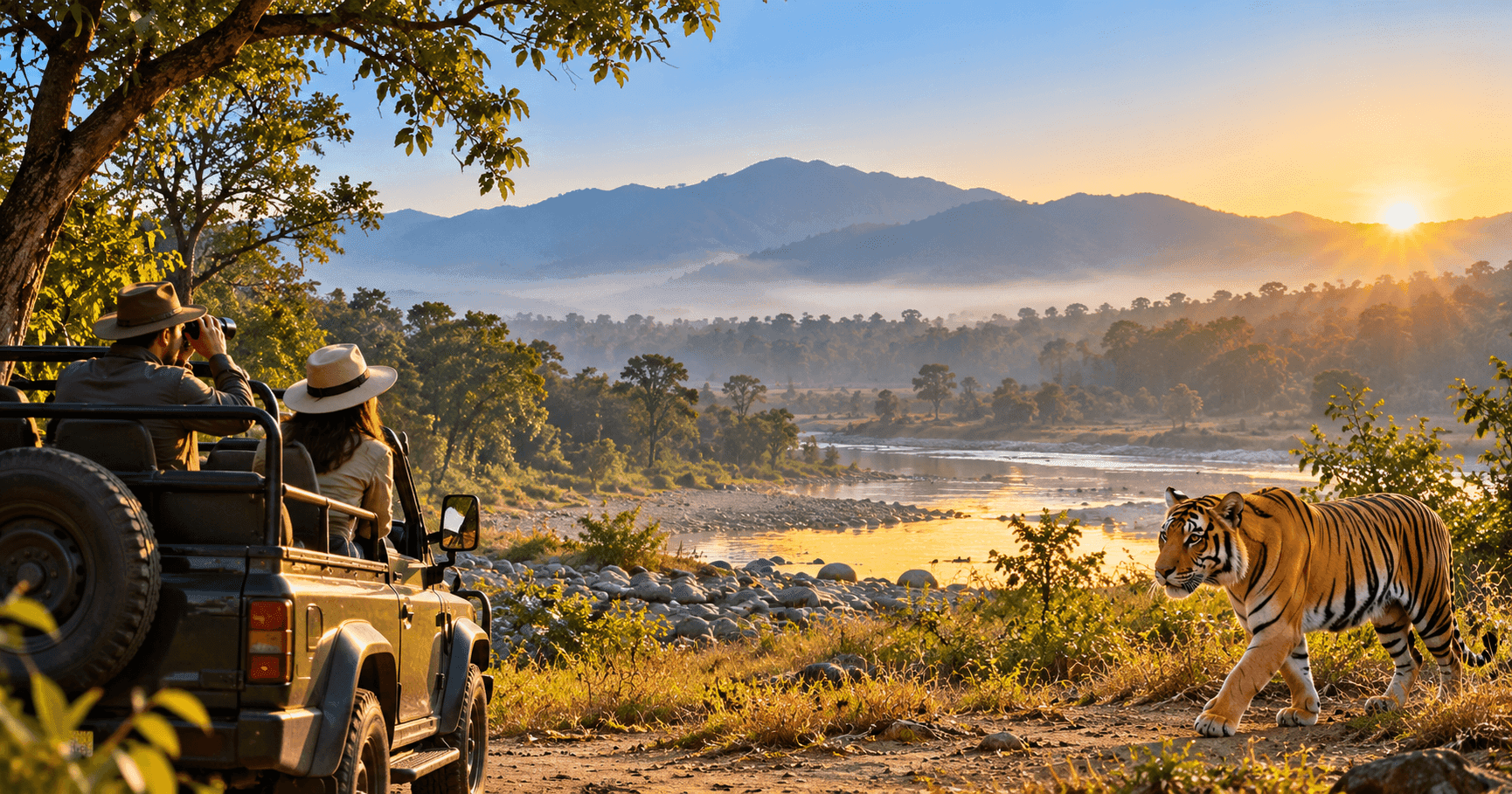
Discover Jim Corbett in December with winter weather insights, safari tips, wildlife experiences and places to visit. Find the best time to visit Jim Corbett and plan a memorable winter getaway with Sarovar Hotels.
December brings a quieter winter atmosphere to Jim Corbett, with cool mornings, comfortable daytime conditions and opportunities to explore the forest at a relaxed pace. For travellers planning a wildlife holiday, the month can be a particularly good time to enjoy safaris, birdwatching and the natural landscapes around the park.
The best time to visit Jim Corbett depends on what you want from your trip. Winter is well suited to travellers who prefer cooler weather and birdwatching, while the warmer months can offer better visibility in some areas as vegetation becomes thinner. This guide covers what to expect in December, safari zones, wildlife, booking tips, a suggested itinerary, what to pack and where to stay.
Comfortable Winter Weather: December offers cooler mornings and generally pleasant conditions for daytime sightseeing and safaris.
Wildlife Experiences: Winter is a good season for birdwatching and exploring Corbett's diverse habitats, although wildlife sightings can never be guaranteed.
Safari Options: Several tourism zones operate during the winter season, subject to current forest department rules and access arrangements.
Early Planning: December is a popular travel period, particularly around Christmas and New Year, so accommodation and safari permits should be arranged early.
Why December Is a Good Time to Visit Jim Corbett
December is one of the more popular periods for visiting Jim Corbett. The intense summer heat has eased, while the monsoon season is over, making outdoor activities more comfortable.
The cooler weather is particularly useful for travellers who want to spend several hours outdoors. Early mornings can be cold, especially during an open jeep safari, but temperatures usually become more comfortable as the day progresses.
December is also a good season for birdwatching. Corbett is home to a wide range of resident and migratory birds, and the winter months can offer good opportunities for observing birdlife around forests, grasslands, rivers and water bodies.
However, it is important not to treat December as a guaranteed tiger-sighting season. Wildlife movement varies from day to day, and sightings depend on factors such as animal behaviour, weather, habitat conditions and luck.
When might be the Best Time to Visit?
There is no single best month for every traveller. Your ideal travel period depends on whether you prioritise comfortable weather, wildlife visibility, birdwatching or a quieter atmosphere.
Season | Months | What to Expect | Best Suited For |
Winter | October to February | Cool mornings, pleasant days and good birdwatching opportunities | Families, birdwatchers and winter travellers |
Summer | March to June | Hotter weather and generally thinner vegetation in some areas | Travellers prioritising wildlife visibility |
Monsoon | July to September | Rain, greener landscapes and changes to safari access | Nature lovers and quieter getaways |
The exact opening and operating arrangements for individual tourism zones can vary, so check the latest information before booking.
Jim Corbett Safari Zones to Explore
Corbett Tiger Reserve has several tourism zones, each with different landscapes and access arrangements. Uttarakhand Tourism currently lists zones including:
1. Dhikala Zone
Dhikala is one of Corbett's best-known tourism zones and is associated with expansive grasslands, forested areas and views of the Ramganga landscape.
The area is popular with travellers interested in larger landscapes and wildlife photography. Overnight stays in forest accommodation can also offer a different experience from a standard day safari, subject to current availability and forest department rules.
2. Bijrani Zone
Bijrani combines Sal forests, grasslands and open areas, creating varied habitats for wildlife.
Its proximity to Ramnagar also makes it a convenient option for travellers staying outside the forest. As with all safari zones, sightings are unpredictable, but the combination of forest and open terrain makes Bijrani an interesting area for wildlife enthusiasts.
3. Jhirna Zone
Jhirna is located towards the southern side of the reserve and is known for its mixed forest landscape.
The zone can be considered by travellers who want to explore a different habitat from the grasslands and forests around Dhikala and Bijrani. Check the latest safari schedule before booking because access can depend on forest department arrangements.
4. Dhela Zone
Dhela features a mix of woodland, grassland and water-rich habitats. Its varied landscape makes it suitable for birdwatching as well as general wildlife viewing.
The zone can be a useful addition to a multi-safari itinerary if permits are available for your travel dates.
5. Durgadevi and Other Tourism Zones
Durgadevi offers a more rugged landscape towards the northern part of the reserve and is particularly interesting for travellers who enjoy birdwatching and forest scenery.
Other tourism zones, including Garjiya, Sonanadi and Pakhro, may also operate according to current tourism arrangements. Since zone access and safari schedules can change, always check the official booking system before planning your itinerary.
What Wildlife Can You See in December?
Corbett is home to a wide variety of mammals, birds and reptiles. A December safari can offer opportunities to see different species, but no particular sighting can be guaranteed.
Bengal Tiger
The Bengal tiger is one of Corbett's most sought-after sightings. Tigers can be seen throughout the year, although their visibility varies with weather, vegetation and behaviour.
Summer can sometimes offer better visibility around water sources, while winter safaris can be more comfortable for visitors.
Asian Elephant
Corbett is also known for its Asian elephant population. Herds may be seen moving through grasslands, forests and riverine areas.
Observing elephants from a safe distance with an experienced guide can be one of the highlights of a Corbett safari.
Deer and Other Herbivores
Chital, sambar, barking deer and other herbivores form an important part of Corbett's ecosystem. They can often be encountered in grasslands and forest clearings.
Their presence can also offer useful clues about predator activity, although animal behaviour remains unpredictable.
Birds
Winter is particularly attractive for birdwatchers. Corbett's varied habitats support a large number of resident and migratory species.
You may encounter waterbirds around rivers and reservoirs as well as forest species in wooded areas. Carrying binoculars can make the experience more rewarding.
Leopards, Sloth Bears and Other Wildlife
Leopards, sloth bears, wild boar, reptiles and numerous smaller species are also part of Corbett's biodiversity. These animals are more elusive, so sightings are less predictable.
The best approach is to remain patient, listen to your guide and focus on the overall forest experience rather than expecting a particular animal.
Safari Options in Jim Corbett
Safari arrangements depend on the zone and the latest forest department rules. Uttarakhand Tourism notes that jeep safaris are available for wildlife exploration, while canter safaris use larger open-roof vehicles and operate under forest department supervision.
Jeep Safari
A jeep safari allows a smaller group to explore the forest in an open 4x4 vehicle. It can be a good option for families, couples and small groups who want a more flexible safari experience.
The exact number of passengers, permitted routes and available zones depend on current regulations.
Canter Safari
Canter safaris use larger open vehicles and can suit travellers who prefer a shared safari experience.
Availability and operating zones can change, so check the official booking information before making your plans.
How Early Should You Book a December Safari?
December is a popular travel period, particularly around Christmas and New Year. Safari permits are regulated and subject to availability, so booking early is advisable.
Rather than relying on a fixed number of days such as 30 or 45, check the official Corbett booking system for the current reservation window and available dates. The National Tiger Conservation Authority lists Corbett's official website among the recognised tiger-reserve resources.
When booking, make sure the personal details on your permit match the identification requirements specified by the booking system. Keep your booking confirmation and required identification with you when travelling.
A Practical 3-Day Itinerary
A three-day trip allows you to combine wildlife experiences with time to relax and explore the surrounding area.
Day 1: Arrival and Riverside Relaxation
Arrive in Ramnagar and check into your hotel or resort.
Spend the afternoon settling in and enjoying your surroundings. If your accommodation is close to the Kosi River, you can spend some time in the area while following local safety instructions.
In the evening, enjoy dinner at your hotel and prepare for an early start the following morning.
Day 2: Morning Safari and Local Sightseeing
Start the day with an early morning safari in an available tourism zone such as Bijrani, Dhikala or another zone selected according to your permit.
Return to your hotel for breakfast and some rest.
In the afternoon, visit Garjiya Devi Temple or another nearby attraction, depending on your interests and the day's opening arrangements.
You can also visit the Corbett Museum at Kaladhungi, the former home of Jim Corbett, if your travel schedule allows.
Day 3: Second Safari and Departure
If your schedule permits, take a second safari in a different zone. Exploring another habitat can give you a different perspective on Corbett's landscapes and wildlife.
After breakfast, check out and spend some time exploring local shops in Ramnagar before beginning your return journey.
What to Pack for Jim Corbett in December
Winter mornings can feel cold during an open jeep safari, so dressing in layers is useful.
Warm Layers: Carry thermal innerwear, a fleece or sweater and a warm jacket for early morning safaris.
Winter Accessories: A cap, scarf and gloves can make long outdoor drives more comfortable.
Comfortable Footwear: Choose closed-toe shoes suitable for walking around your accommodation and nearby attractions.
Neutral-Coloured Clothing: Muted colours can be more suitable for wildlife viewing than very bright clothing.
Binoculars: A pair of binoculars can be particularly useful for birdwatching.
Sun Protection: Carry sunscreen, sunglasses and lip balm for daytime outdoor activities.
Camera Equipment: If you are carrying a camera, bring suitable protection for dust, cold conditions and changing temperatures.
Smart Tips for a Winter Safari
A few simple habits can make your safari more comfortable while helping you respect the forest environment.
Arrive on Time: Follow the reporting time mentioned on your safari permit and avoid delays at the entry gate.
Follow Your Guide's Instructions: Guides and drivers understand the forest routes and visitor rules. Follow their instructions rather than asking them to approach animals or leave permitted routes.
Keep Noise Low: Loud conversations can disturb wildlife and affect the experience for other visitors.
Do Not Feed Animals: Feeding or attempting to attract wildlife is unsafe and against responsible wildlife-tourism practices.
Avoid Littering: Carry reusable water bottles where permitted and take all waste back with you.
Be Patient: Wildlife sightings are never guaranteed. A quiet forest drive can be rewarding even when you do not see a tiger.
Respect Photography Rules: Avoid flash photography where it is restricted and maintain a safe distance from animals.
Where to Stay in Jim Corbett
Choosing the right hotel in Jim Corbett can make your winter safari more comfortable. Consider the property's location, distance from your safari gate, room facilities, dining options and access to transport. Travellers looking for hotels in Jim Corbett should compare these factors before confirming their December stay.
ABN Sarovar Portico, Jim Corbett
ABN Sarovar Portico, Jim Corbett is located in Dhikuli, Ramnagar, and offers 65 rooms and cottages. The property is around 9.8 km from Dhangarhi Gate and Museum and close to attractions such as Garjiya Devi Temple and the Kosi River.
Its location in Dhikuli can make it a convenient base for travellers planning a combination of safari experiences and a relaxed winter stay. Check the latest room availability, rates and booking terms before confirming your December trip.
December can be a rewarding time to experience Jim Corbett if you want cooler weather, winter birdwatching and comfortable conditions for spending time outdoors. At the same time, the park's wildlife is unpredictable, so it is better to plan around the overall forest experience rather than expect a particular animal sighting.
Book your accommodation and safari permits early, check the latest zone availability before travelling and pack warm layers for early morning drives. With a balanced itinerary, you can combine wildlife safaris with time to relax and explore the area around Ramnagar.
For your winter getaway, explore accommodation options with Sarovar Hotels and plan a comfortable stay around your preferred safari and sightseeing activities.
Make your winter escape to Jim Corbett memorable with a comfortable stay at ABN Sarovar Portico, Jim Corbett. Whether you are planning a family holiday, a romantic retreat or a wildlife adventure, plan your stay in advance and enjoy a relaxing getaway surrounded by nature.
For reservations and booking enquiries, contact Sarovar Hotels:
Call: +91 98 8680 0049
Book your stay in advance, especially during the Christmas and New Year holiday season, and check room availability and booking terms before confirming your reservation.