
Loading…
Loading…
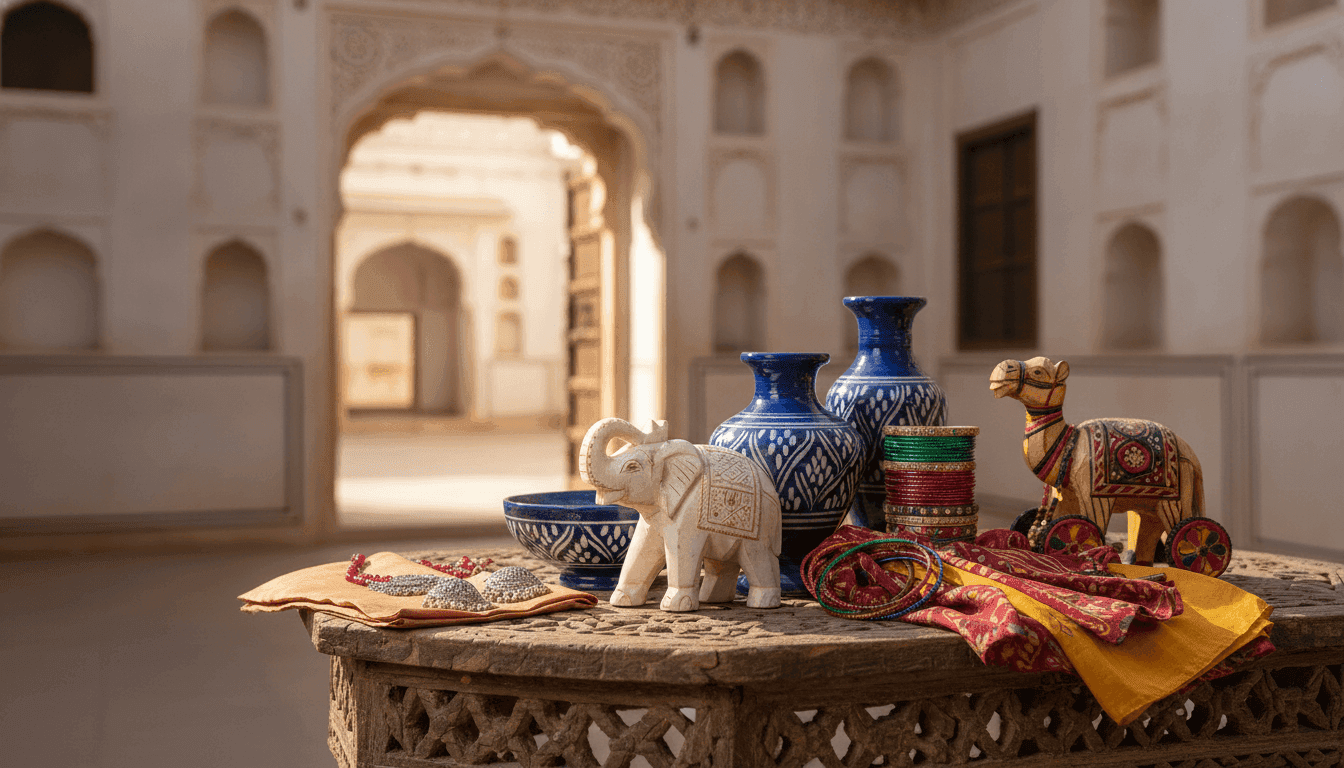
Discover traditional Jaipur handicrafts, from blue pottery and marble art to wooden crafts, lac bangles, textiles and jewellery, with a guide to Jaipur's famous craft markets and tips for choosing authentic souvenirs.
Jaipur is celebrated for its forts, palaces and colourful bazaars, but its traditional crafts are equally important to the identity of the Pink City. From delicate Jaipur blue pottery and hand-carved marble pieces to colourful textiles, lac bangles and wooden crafts, the city's markets offer travellers plenty of ways to take a piece of Rajasthan home.
The craft traditions of Jaipur reflect influences from Rajasthan's royal history as well as techniques that have evolved over generations. Rajasthan Tourism highlights Sanganeri printing, Bagru prints, quilts, lac bangles, leather footwear and jewellery among the region's distinctive handicrafts.
For travellers interested in shopping, exploring the city's traditional markets can be as rewarding as visiting its monuments. The main bazaars include Johari Bazaar, Chandpol Bazaar, Tripolia Bazaar, Kishanpole Bazaar, Bapu Bazaar and Nehru Bazaar.
The appeal of Jaipur handicraft lies in the combination of skilled workmanship, regional materials, distinctive patterns and centuries-old craft traditions.
Many products are made by hand or involve significant hand-finishing, which means individual pieces can have small variations. These differences can be part of their character rather than a flaw.
Jaipur's crafts also cover a wide range of products. Travellers can find decorative objects for the home, textiles, jewellery, pottery, footwear, accessories and small souvenirs.
Whether you are looking for a practical purchase or a decorative keepsake, exploring local craft markets gives you an opportunity to understand Jaipur beyond its major tourist attractions.
Jaipur blue pottery is one of the city's most recognisable crafts and a popular choice among visitors.
According to Rajasthan Tourism, blue pottery came to Rajasthan through Mughal influences and has Persian and Afghan connections. Unlike conventional earthen pottery, Jaipur's blue pottery is made using a quartz-based composition rather than clay.
The craft is known for its distinctive blue and turquoise tones, often combined with floral, bird and animal motifs. Products can include plates, vases, trays, coasters, soap dishes, fruit bowls and decorative tiles.
Because many pieces are delicate, ask the seller about suitable packaging if you are travelling by air or carrying the item over a long distance.
Lac bangles are another traditional craft associated with Rajasthan and Jaipur's markets.
Tripolia Bazaar is particularly associated with lac bangles and traditional jewellery. The Jaipur Municipal Corporation lists Tripolia Bazaar among the city's major markets and identifies lac jewellery and bangles as key products sold there.
For travellers looking for colourful accessories, lac bangles can make lightweight souvenirs that are easy to carry.
Jaipur is also known for jewellery traditions involving kundan, meenakari, gold, silver and gemstones. Johari Bazaar is one of the city's best-known jewellery markets.
When purchasing expensive jewellery or gemstones, ask for appropriate documentation and consider buying from established sellers.
Jaipur wooden handicrafts offer another way to experience Rajasthan's decorative craft traditions.
Wood is used to create carved decorative pieces, small household objects, traditional toys and other souvenirs. Kishanpole Bazaar is particularly associated with wood carvings, souvenirs and traditional artefacts.
Wooden crafts can be a practical choice for travellers who want something more durable than delicate pottery.
When buying a carved piece, look closely at the finishing, joins and surface details. Handmade products can have slight variations, so compare several pieces before deciding.
For travellers interested in decorative stonework, marble handicrafts Jaipur Rajasthan offers a wide range of possibilities.
Marble is used for carved figures, decorative objects, inlay work and architectural pieces. Chandpol Bazaar is particularly associated with marble crafts and handicrafts. The Jaipur Municipal Corporation identifies the market as a destination for marble artefacts, handicrafts, furniture and art.
Marble pieces can become heavier than other souvenirs, so consider size and weight before purchasing if you have limited luggage space.
For larger decorative pieces, ask the seller about packaging and transportation arrangements.
Textiles are among the most versatile Rajasthan handicrafts Jaipur visitors can shop for.
Rajasthan is known for Sanganeri printing and Bagru printing, along with colourful fabrics, quilts and traditional clothing. Rajasthan Tourism specifically highlights these textile traditions among the state's major handicrafts.
You can find fabrics, scarves, bedspreads, bags and clothing featuring colourful patterns and traditional designs.
Textiles are also relatively easy to pack, making them popular souvenirs for travellers who want something useful rather than purely decorative.
Traditional puppets are another colourful example of Rajasthan's craft heritage.
Rajasthani puppets, decorative figures and small souvenirs can be found in markets around the old city. They are particularly appealing to travellers looking for lightweight decorative pieces.
The Rajasthan Tourism heritage-walk material notes that the markets around Hawa Mahal offer products including puppets, blue pottery, terracotta, tie-dye prints, metal and wood crafts and juttis.
These smaller products can be convenient gifts because they are relatively easy to carry.
Traditional Rajasthani footwear is another popular purchase in Jaipur.
Juttis and mojaris are available in different colours and designs, from simple everyday styles to heavily decorated versions.
Rajasthan Tourism identifies leather footwear among Jaipur's well-known handicrafts, while the city's markets offer numerous opportunities to compare styles and designs.
Try footwear on before buying because sizing and fit can vary between manufacturers.
The best place to shop depends on the type of Jaipur craft you are looking for.
Johari Bazaar is particularly well known for jewellery, gemstones and traditional ornamentation. The Jaipur Municipal Corporation also lists handicrafts, furniture and art among products available in the market.
It can be a useful stop if jewellery is a priority during your Jaipur shopping experience.
Chandpol Bazaar is a strong choice for travellers interested in marble crafts, handicrafts, furniture and decorative art.
The market can be included in a broader old-city shopping itinerary.
Tripolia Bazaar is known for lac bangles, traditional jewellery and handloom-related products.
Its location within the historic city makes it easy to combine with nearby sightseeing.
Kishanpole Bazaar is associated with wood carvings, traditional artefacts and Rajasthani dyed fabrics.
It can be a good option if you want to explore crafts beyond jewellery and textiles.
Bapu Bazaar is another popular shopping destination for visitors, with a range of textiles, handicrafts, footwear and souvenirs.
The city's traditional markets are concentrated around the historic walled city, making it possible to combine shopping with visits to attractions such as Hawa Mahal and City Palace.
Travellers buying a few souvenirs have different needs from those purchasing crafts in bulk.
If you are specifically searching for a Jaipur handicrafts wholesale market, ask sellers about minimum quantities, bulk pricing, customisation, packaging and shipping before placing an order.
For individual travellers, comparing several shops can be more useful than focusing only on wholesale pricing.
If you are purchasing for a business, hotel, interior project or event, request a detailed quotation and clarify taxes, delivery timelines and packaging before confirming a large order.
Buying traditional crafts is part of the fun, but it is worth taking a few precautions.
Do not make an immediate purchase after seeing the first item. Compare designs, quality and prices at different shops.
Look carefully at painted surfaces, carving details, stitching, joints and glazing. Small handmade variations are normal, but obvious cracks, poor finishing or structural damage should be considered before purchasing.
If you are buying an expensive item, ask exactly what materials have been used and whether the product has any certification or documentation where applicable.
Fragile products such as blue pottery and marble pieces require suitable packaging. Ask the seller to protect the item properly for your journey.
For higher-value purchases, keep invoices or receipts. This can be useful for documentation, returns or transport-related questions.
The best handicraft item in Jaipur depends on your budget, luggage space and intended use.
For easy-to-carry gifts, consider small blue pottery pieces, textiles, scarves, lac bangles, puppets or decorative accessories.
For home décor, wooden carvings, marble artefacts, larger pottery pieces and traditional textiles can be considered.
If you are buying jewellery, take additional care with authenticity, documentation and pricing, particularly for high-value gemstones.
If shopping is an important part of your Jaipur itinerary, accommodation can influence how easily you can explore the city's markets.
When comparing hotels in Jaipur, consider the property's location, access to the walled city, road connectivity and proximity to shopping and dining areas.
A convenient hotel allows you to return between shopping trips, store purchases safely and continue exploring later in the day.
For families, comfortable rooms and dining facilities can make market-heavy itineraries easier. Couples may prefer a centrally located property that allows convenient access to Jaipur's evening dining and shopping scene.
Start your shopping earlier in the day if you want to explore markets before they become especially busy.
Carry smaller denominations of cash for purchases at smaller shops, while also using secure payment methods where available.
If you are bargaining, remain respectful and realistic about the value of handmade work.
For fragile products, avoid overpacking your luggage and ask the seller for appropriate protective packaging.
If you are purchasing a high-value gemstone or jewellery item, do not rush the decision. Ask questions about authenticity, certification, materials and return policies.
Most importantly, treat handicraft shopping as part of the cultural experience. Take time to observe the workmanship and understand what makes each craft distinctive.
Exploring Jaipur handicraft traditions is an opportunity to discover a different side of the Pink City. Beyond forts and palaces, the city's blue pottery, wooden crafts, marble work, lac bangles, textiles, jewellery and traditional footwear reflect the skill and creativity of Rajasthan's artisans.
From Chandpol and Kishanpole to Tripolia and Johari Bazaar, each market has its own character and craft specialties. Take time to compare products, understand materials, check quality and choose items that genuinely appeal to you.
For travellers planning a shopping-focused Jaipur holiday, a conveniently located hotel can make it easier to explore markets while keeping your purchases secure and giving you a comfortable place to return to.
With convenient accommodation options across the city, Sarovar Hotels can be a comfortable base for travellers discovering Jaipur's traditional crafts, markets, food and heritage.
Make your Jaipur shopping experience more convenient by choosing accommodation that fits your itinerary. Explore Sarovar Hotels in Jaipur and select a property based on your preferred location and travel plans.
Central Reservations: +91 98 8680 0049
Email: reservations@sarovarhotels.com
Stay with Sarovar Hotels and discover Jaipur's traditional crafts, colourful bazaars and rich artistic heritage