
Loading…
Loading…
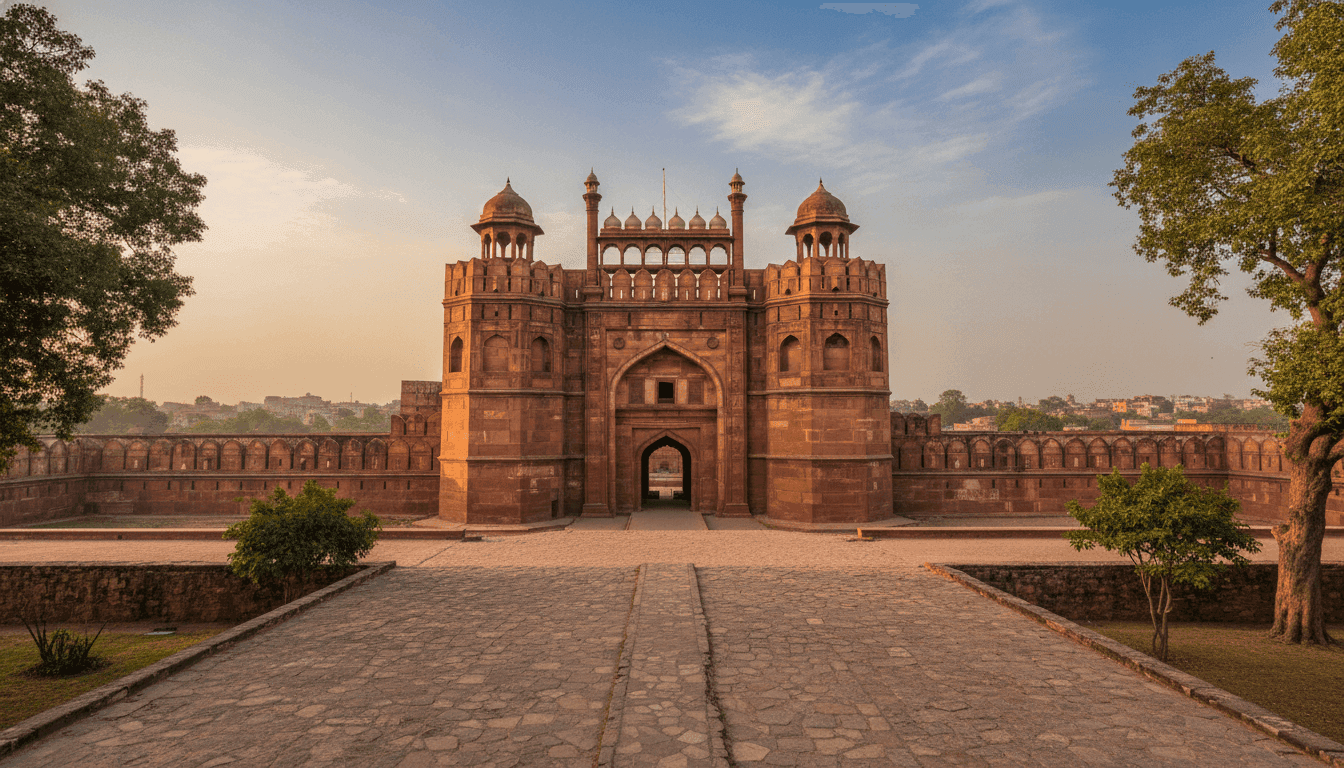
Explore Agra Fort, a UNESCO World Heritage Site showcasing Mughal architecture, grand palaces, audience halls and red-sandstone walls, while discovering its history, location, key monuments and nearby attractions in Agra.
Agra is widely known for the Taj Mahal, but the city's Mughal heritage extends far beyond its most famous monument. At the heart of this legacy stands Agra Fort, a massive red-sandstone complex that reflects centuries of imperial history and the changing character of Mughal design.
Also known as Agra Kila and the Red Fort of Agra, the monument was commissioned by Mughal emperor Akbar in 1565 and subsequently expanded and embellished by later rulers. It became a major imperial residence and administrative centre before its historical role changed under British rule.
Today, Agra Fort is one of the most important historical places in Agra and a UNESCO World Heritage Site. Its palaces, audience halls, courtyards, mosques and defensive walls provide an opportunity to understand the evolution of Mughal architecture.
The history of Agra Fort is closely connected with the rise of Agra as an important centre of Mughal power.
Akbar ordered the rebuilding of the fort in 1565, using red sandstone for the principal construction. His successors continued developing the complex, with Shah Jahan introducing extensive marble structures and more refined decorative elements.
This architectural evolution is one of the most interesting aspects of the fort. Visitors can see the contrast between the imposing red-sandstone buildings of the earlier period and the elegant marble additions associated with Shah Jahan.
The result is a complex that documents several stages of Mughal imperial architecture rather than representing one single architectural moment.
The Agra Fort location makes it convenient to include the monument in a wider Agra sightseeing itinerary. The fort is situated near the Yamuna River and is approximately 2.5 km from the Taj Mahal. Agra Cantt railway station is around 3 km away.
Visitors can reach the fort by road from different parts of Agra using taxis, auto-rickshaws and other local transport. Travellers arriving by train can continue by road from Agra's railway stations.
Its proximity to the Taj Mahal means visitors can conveniently combine two of the city's most significant Mughal monuments in the same trip.
The scale of Agra Kila becomes apparent as soon as visitors approach its enormous fortified walls. The complex extends beyond its defensive appearance, containing royal residences, ceremonial halls, courtyards, mosques and gardens.
UNESCO describes Agra Fort as a 2.5-kilometre-long enclosure containing several important structures, including Jahangir Palace, Khas Mahal, Diwan-i-Khas and mosques.
The combination of military planning and royal architecture makes the fort particularly significant. It was designed to protect an imperial centre while also providing spaces for governance, residence and ceremonial activities.
Exploring the fort becomes more rewarding when visitors understand the purpose and architectural character of its major structures.
Jahangir Mahal is one of the most prominent red-sandstone palace structures within the fort. Its substantial scale, large courtyard and architectural details reflect the building traditions of Akbar's period.
The palace illustrates how the fort served as both a defensive stronghold and a royal residential complex.
The Khas Mahal represents the refined palace architecture associated with Shah Jahan. Its use of white marble creates a strong visual contrast with the earlier red-sandstone structures.
Decorative details and elegant proportions demonstrate the increasingly sophisticated character of Mughal palace architecture during Shah Jahan's reign.
The Diwan-i-Aam, or Hall of Public Audience, was used for imperial audiences and public petitions.
Its architectural arrangement reflects the administrative role of the Mughal court, showing that Agra Fort was not merely a royal residence but also an important centre of governance.
The Diwan-i-Khas, or Hall of Private Audience, was intended for more private imperial meetings.
Its more intimate setting and decorative character distinguish it from the public audience hall. UNESCO identifies the Diwan-i-Khas among the important buildings within the fort complex.
Musamman Burj is an octagonal tower associated with Shah Jahan. One of its most memorable features is the view towards the Taj Mahal across the Yamuna.
The Agra district administration also highlights its connection with Shah Jahan's final years, adding another important historical dimension to the structure.
Sheesh Mahal is known for its decorative mirror work and provides another example of the ornamental craftsmanship found within the complex.
Together, these buildings reveal the range of Agra Fort architecture, from massive defensive structures to detailed royal interiors.
The importance of Agra Fort architecture lies in the way military design, royal living spaces, administration and decorative arts were brought together.
Red sandstone dominates many of the structures commissioned during Akbar's rebuilding of the fort. Later additions, particularly under Shah Jahan, made extensive use of white marble.
The contrast between these materials makes the architectural development of the complex easy to appreciate even for first-time visitors.
Arches, domes, courtyards, pavilions and enclosed spaces appear throughout the complex. These elements served practical, ceremonial and aesthetic purposes.
The arrangement of these spaces reflects the organisation of a functioning imperial city rather than a simple defensive fort.
Later Mughal structures demonstrate intricate decorative work alongside marble construction.
The combination of structural scale and detailed ornamentation makes Agra Fort an important example of the art and architecture of Mughal Empire.
The development of Mughal architecture was influenced by several artistic and building traditions.
At Agra Fort, these influences can be seen in the use of Persian-inspired planning alongside Indian craftsmanship and architectural traditions. Under Akbar, red sandstone and substantial structural forms were particularly prominent, while Shah Jahan's period brought a greater emphasis on marble, symmetry and refined ornamentation.
This evolution is one reason Agra Fort is valuable to students, architecture enthusiasts and travellers interested in the art and architecture of Mughal Empire.
Rather than viewing Mughal architecture as a fixed style, visitors can use Agra Fort to understand how imperial architecture changed across different reigns.
Agra Fort is one of the most significant historical places in Agra because of its connection with successive Mughal rulers and the city's role in imperial history.
The fort served as a major seat of Mughal power and later witnessed changes during the British period. Its buildings therefore represent both architectural development and political history.
For visitors exploring Agra's heritage, the fort provides important context for understanding the city beyond the Taj Mahal.
As an Agra tourist destination, the fort offers more than a short sightseeing stop.
The complex is large and contains numerous buildings, courtyards and architectural details. Visitors interested in history or architecture should allow enough time to explore rather than simply photographing the exterior walls.
Agra Fort can also be combined with other major attractions, including the Taj Mahal, Itmad-ud-Daulah's Tomb and Mehtab Bagh.
A visit to Agra Fort can become part of a wider heritage itinerary covering some of the best places to visit in Agra.
The Taj Mahal is Agra's most famous monument and another UNESCO World Heritage Site. Built during Shah Jahan's reign, it represents one of the finest expressions of later Mughal architecture.
Combining the Taj Mahal with Agra Fort allows visitors to compare two different architectural expressions from the Mughal period.
Itmad-ud-Daulah's Tomb is known for its marble construction and intricate decorative work.
Its scale is considerably smaller than Agra Fort, but it offers another perspective on the development of Mughal decorative architecture.
Located across the Yamuna from the Taj Mahal, Mehtab Bagh provides a quieter garden setting and views towards the monument.
It can be included in a relaxed itinerary after visiting the city's main heritage sites.
Travellers with additional time can consider Fatehpur Sikri, another major Mughal-era destination associated with Akbar.
The UNESCO-listed complex includes important structures such as Buland Darwaza, Jama Masjid and Panch Mahal.
The cooler months are generally more comfortable for exploring a large open heritage complex such as Agra Fort.
Winter mornings can be particularly pleasant for combining the fort with other attractions. Summer afternoons can become hot, so visitors should plan outdoor sightseeing around more comfortable hours and carry sufficient drinking water.
The monsoon season can bring changes in weather and road conditions, although the surrounding landscape can appear greener.
Always verify current visitor information before travelling because monument timings, ticket arrangements and access conditions may change.
The Agra district administration currently lists Agra Fort as open from sunrise to sunset, approximately 6:00 AM to 6:00 PM, throughout the week. Entry is currently through Amar Singh Gate.
The district administration currently lists entry fees of ₹50 for Indian citizens, ₹90 for SAARC/BIMSTEC nationals and ₹650 for other foreign nationals, with children below 15 years listed as free. Visitors should verify current fees before travelling because ticket prices and visitor arrangements can change.
The same official source places the fort approximately 2.5 km from the Taj Mahal and around 3 km from Agra Cantt railway station.
Accommodation can make a difference when planning an Agra heritage itinerary, particularly if you want to visit the Taj Mahal, Agra Fort and other attractions without spending excessive time travelling between locations.
Travellers comparing the best hotels in Agra can consider location, access to attractions, room comfort, dining, parking and available travel assistance.
Royale Sarovar Portico, Agra, located on Fatehabad Road, is one option from Sarovar Hotels. The hotel lists itself at approximately 4.8 km from Agra Fort and 2.9 km from the Taj Mahal, along with facilities including a swimming pool, spa, fitness centre, Wi-Fi and travel desk.
For travellers planning multiple heritage attractions, a convenient hotel location can help create a more comfortable sightseeing schedule.
An early visit can be more comfortable, particularly during warmer months. It also gives you more time to explore other attractions later in the day.
Agra Fort involves walking across courtyards, pathways and historic structures, so comfortable footwear is recommended.
Agra can become hot, especially outside the winter season. Carry water and take breaks when required.
Architecture enthusiasts should avoid treating the fort as a quick photo stop. Allow enough time to appreciate the palaces, halls, courtyards and viewpoints.
Verify current timings, entry fees and access arrangements before travelling. The Agra district administration provides updated visitor information for the monument.
Agra Fort brings together several elements that define Agra's heritage: Mughal history, monumental architecture, royal residences, defensive planning and decorative craftsmanship.
Its red-sandstone walls are only the beginning. Inside, the combination of Akbar-period structures and Shah Jahan's marble additions reveals how Mughal design evolved over time.
For anyone exploring the best places to visit in Agra, the fort also provides valuable context for understanding the Taj Mahal and the broader Mughal landscape of the city.
Agra Fort is one of the finest places to experience the evolution of Mughal architecture and understand Agra's importance during the Mughal era. From its imposing red-sandstone walls and royal palaces to its marble detailing and views towards the Taj Mahal, the fort offers a deeper perspective on the city's rich heritage.
For travellers exploring the best places to visit in Agra, Agra Fort can be combined with the Taj Mahal, Itmad-ud-Daulah's Tomb and other historic attractions for a well-rounded heritage itinerary. Plan your visit with enough time to appreciate the fort's architecture, history and major monuments.
A comfortable and conveniently located hotel can also make sightseeing easier. Sarovar Hotels offers accommodation in Agra, including Royale Sarovar Portico, providing travellers with a practical base for exploring the city's famous heritage attractions.
Make your Agra heritage trip comfortable with a stay that complements your sightseeing plans. Whether you're visiting the Taj Mahal, exploring Agra Fort or discovering other historical places in Agra, Sarovar Hotels can help you plan a convenient stay.
For reservations and stay enquiries:
Call: +91 98 8680 0049
Email: reservations@sarovarhotels.com
Plan your Agra getaway with Sarovar Hotels and experience the history, architecture and timeless heritage of the City of the Taj.