
Loading…
Loading…
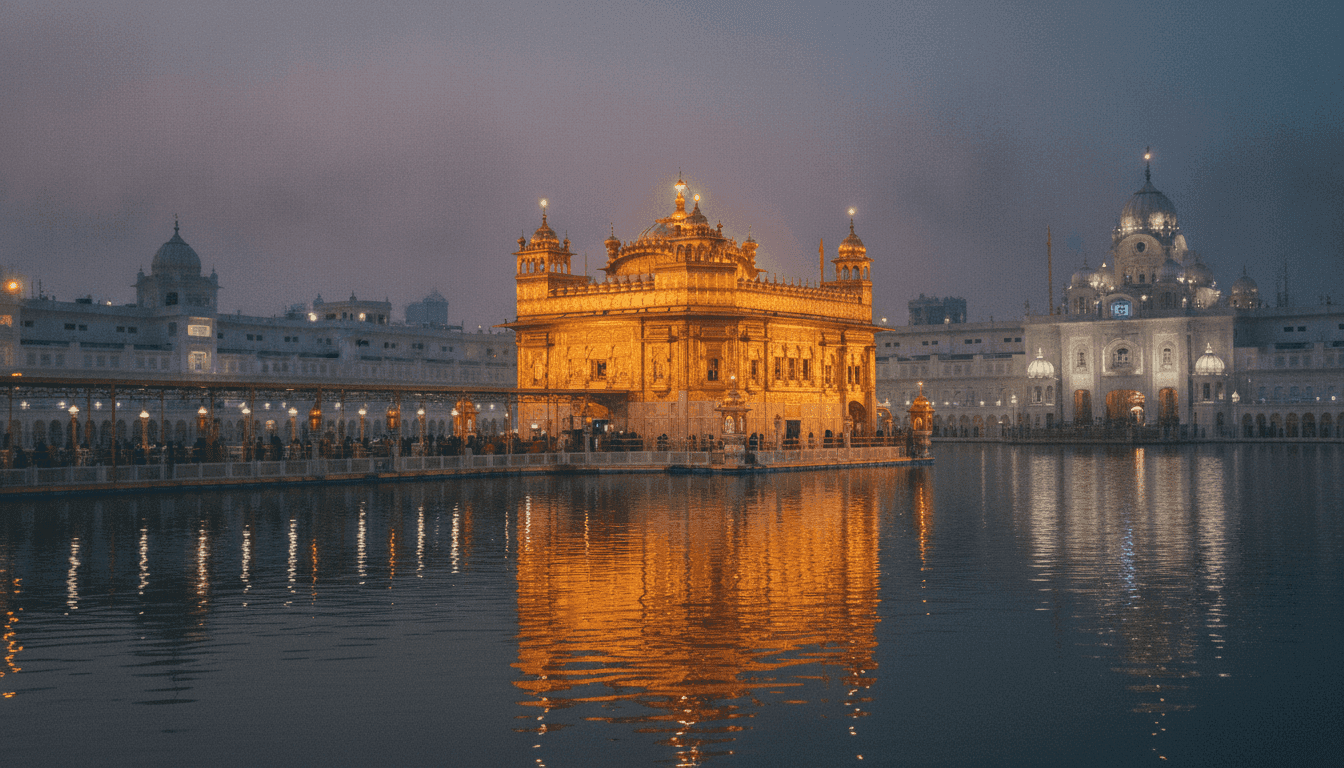
Have you ever visited a place where thousands of people gather every day, yet an overwhelming sense of peace fills the air? The Golden Temple, also known as Sri Harmandir Sahib or Swarna Mandir, is one of those rare destinations. Located in the heart of Amritsar, Punjab, this sacred Sikh shrine welcomes millions of visitors regardless of their religion, nationality, or background.
Its gleaming gold-covered sanctum, serene Amrit Sarovar, and the continuous recitation of Gurbani create an experience that stays with visitors long after they leave.
Whether you are planning your first trip to Amritsar or simply want to understand why the Golden Temple is considered one of India’s most revered landmarks, this guide covers everything from its fascinating history and breathtaking night view to visiting hours, etiquette, travel tips, and hotels nearby.
The story of the Golden Temple begins in the late 16th century, when Guru Arjan Dev Ji, the fifth Sikh Guru, envisioned a place of worship that would welcome people from all walks of life.
Construction of the temple began in 1581, and the shrine was completed in 1604, when the first version of the Sikh holy scripture was installed inside.
Unlike many traditional temples built on elevated platforms, the Golden Temple was intentionally constructed at a lower level. Visitors descend a few steps before entering, symbolising humility—a core principle of Sikhism.
The temple’s four entrances face different directions and represent openness and equality. They reflect the Sikh belief that every individual is welcome regardless of caste, religion, gender, or social status.
During the early 19th century, Maharaja Ranjit Singh, the founder of the Sikh Empire, commissioned the temple’s upper floors to be covered with gold. This gave rise to the popular names Golden Temple and Swarna Mandir.
Today, its shimmering golden façade has become one of India’s most recognised architectural landmarks.
Beyond its beauty, the Golden Temple remains the spiritual centre of Sikhism and continues to inspire millions through its message of compassion, service, humility, and equality.
Many visitors arrive expecting to see a magnificent monument but leave with something far more meaningful.
The atmosphere inside the complex is remarkably calming. Volunteers quietly sweep the marble pathways, pilgrims pray beside the sacred pool, and devotional hymns echo continuously throughout the day.
One of the most inspiring traditions here is the Guru Ka Langar, a large free community kitchen where freshly prepared vegetarian meals are served to visitors by volunteers.
Watching people from different countries, cultures, faiths, and social backgrounds sit together on the floor to share the same meal is a powerful reminder of the values represented by the Golden Temple.
One of the most memorable experiences is sitting quietly beside the Sarovar after sunset, listening to Gurbani while watching the temple’s reflection ripple across the water.
It is a simple experience, yet one that captures the spirit of the Golden Temple more powerfully than any photograph.
Experiencing the Golden Temple after sunset is one of the highlights of a visit to Amritsar.
As darkness falls, thousands of lights illuminate the gold-plated shrine, transforming it into a breathtaking spectacle reflected in the still waters of the Amrit Sarovar.
The combination of shimmering lights, peaceful chants, and the cool evening breeze creates an atmosphere that feels both serene and deeply spiritual.
The evening also allows visitors to spend time walking around the marble parikrama, sitting beside the sacred pool, or quietly taking in the surroundings.
Photography enthusiasts often consider the evening one of the best times to capture the temple’s iconic reflection. Visitors should, however, remain respectful and avoid disturbing worshippers while taking photographs.
Whether you are travelling with family, visiting Amritsar as a couple, or exploring the city on a solo spiritual journey, the Golden Temple night view is an experience you are likely to remember long after your trip.
Along the marble parikrama surrounding the Sarovar
Near the main entrance overlooking the sanctum
From the opposite side of the Amrit Sarovar
From quieter areas of the complex after sunset
Avoid using flash near worshippers.
Keep pathways clear while taking photographs.
Respect photography restrictions inside prayer areas.
Use reflections in the Sarovar to frame the temple.
Visit after sunset to capture the illuminated façade.
One of the unique aspects of the Golden Temple is that it welcomes visitors throughout the day and night.
The temple complex is generally accessible 24 hours a day, seven days a week. However, the timings of individual ceremonies and religious activities may vary throughout the year.
Early mornings and evenings are particularly popular for attending prayers and experiencing the temple’s spiritual atmosphere.
The early morning offers a peaceful atmosphere, cooler weather, and an opportunity to experience morning prayers.
This is an ideal time for visitors who prefer fewer crowds and a more reflective experience.
The evening is ideal for witnessing the illuminated Golden Temple and enjoying the tranquil ambience around the sacred pool.
Visitors who want to see the famous Golden Temple night view should plan to remain in the complex after sunset.
The most comfortable months for visiting Amritsar are generally from October to March, when temperatures are cooler and sightseeing is more pleasant.
Weekdays are usually less crowded than weekends, public holidays, and major Sikh festivals.
The Golden Temple welcomes everyone, but visitors are expected to follow certain customs as a mark of respect.
All visitors must cover their heads before entering the temple complex.
Head coverings are often available near the entrance, although visitors may also carry their own scarf, handkerchief, or suitable cloth.
Shoes must be removed before entering the complex. Visitors are also required to wash their feet at the designated entrance area.
Wear clothing that covers the shoulders and knees. Avoid clothing that may be considered inappropriate for a religious place.
Speak softly and avoid unnecessary noise, especially in prayer areas and near people who are meditating.
Smoking, tobacco, alcohol, and other intoxicants are prohibited within the temple premises.
Visitors should avoid consuming these substances before entering the complex.
Photography may be permitted in several outdoor areas, but restrictions can apply in prayer halls and other sacred spaces.
Always observe posted instructions and respect the privacy of worshippers.
The Guru Ka Langar is one of the most meaningful experiences at the Golden Temple.
This free community kitchen serves vegetarian meals to visitors from all religions, nationalities, and social backgrounds.
Everyone sits together on the floor and receives the same food, reinforcing the Sikh principles of equality, humility, and selfless service.
The meals are prepared, served, and cleaned up largely through the efforts of volunteers.
Free vegetarian meals
Simple and nutritious food
Shared seating on the floor
Meals served by volunteers
An atmosphere of equality and community
Sit in the designated rows.
Accept only as much food as you can finish.
Avoid wasting food.
Follow volunteers’ instructions.
Return utensils to the designated collection area.
Consider volunteering if you have sufficient time.
Choosing accommodation near the Golden Temple makes it easier to visit the shrine at different times of the day without worrying about long commutes.
Staying nearby is especially convenient for visitors who want to attend early morning prayers or admire the Golden Temple at night.
Sarovar Portico Amritsar is one accommodation option within driving distance of the Golden Temple and several popular attractions in the city.
The hotel offers modern rooms, contemporary amenities, and access to shopping and sightseeing areas, making it suitable for families, business travellers, groups, and leisure visitors.
Guests can also explore nearby attractions such as Jallianwala Bagh, Hall Bazaar, the Partition Museum, and the Wagah Border.
When choosing a hotel near the Golden Temple, consider the following factors:
Distance from the Golden Temple
Availability of local transport
Parking facilities
Flexible check-in and check-out
Family-friendly rooms
In-house dining
Early breakfast availability
Luggage storage
Accessibility for senior citizens
Easy access to morning prayers
Convenient late-evening visits
Less time spent commuting
Walking access to nearby markets
Proximity to Jallianwala Bagh and other attractions
Greater flexibility when planning your itinerary
A trip to the Golden Temple can be combined with several important historical and cultural attractions in Amritsar.
Located close to the Golden Temple, Jallianwala Bagh is one of India’s most significant historical sites.
The memorial commemorates the victims of the Jallianwala Bagh massacre and offers visitors an opportunity to understand an important chapter in India’s freedom struggle.
The Partition Museum presents personal stories, documents, photographs, and exhibits connected with the Partition of India in 1947.
It provides valuable historical context for visitors interested in the region’s modern history.
Hall Bazaar is one of Amritsar’s popular shopping areas.
Visitors can shop for traditional Punjabi clothing, handicrafts, juttis, jewellery, spices, souvenirs, and local food products.
The Wagah Border is known for the daily ceremonial retreat conducted by the security forces of India and Pakistan.
It is located outside central Amritsar, so visitors should allocate sufficient travel time.
A little preparation can make your visit smoother and more rewarding.
The temple offers two very different experiences during daylight and after sunset.
A daytime visit allows you to appreciate its architecture and details, while an evening visit showcases its illuminated façade and reflection in the Sarovar.
Set aside at least three to four hours to explore the temple complex, walk around the Sarovar, visit the Langar, and spend some quiet time in the surroundings.
Security checks are conducted at the entrance, so avoid carrying large bags or unnecessary items.
Choose modest, lightweight clothing and comfortable footwear that can be removed easily at the entrance.
Major festivals and religious occasions can attract significantly larger crowds.
Book accommodation and transportation well in advance when travelling during Gurpurab or other important celebrations.
Plan your itinerary to include Jallianwala Bagh, the Partition Museum, Hall Bazaar, and other nearby attractions.
This will help you experience the history and culture of Amritsar more completely.
The Golden Temple is much more than a magnificent monument covered in gold. It is a living symbol of faith, equality, compassion, humility, and selfless service.
From its remarkable history and timeless architecture to the unforgettable sight of its illuminated reflection shimmering across the sacred Sarovar, every moment spent here offers an opportunity for reflection and connection.
Whether you come to admire its heritage, seek spiritual peace, or experience one of India’s most iconic landmarks, the Golden Temple leaves an impression that extends far beyond the visit itself.
As you plan your journey to Amritsar, allow enough time not only to see the temple but also to slow down, listen to the hymns, share a meal at the Langar, and experience the warmth and hospitality that have welcomed visitors for centuries.
Some places are admired for their beauty. The Golden Temple is remembered for how it makes you feel.